FUTURE HEIRLOOMS
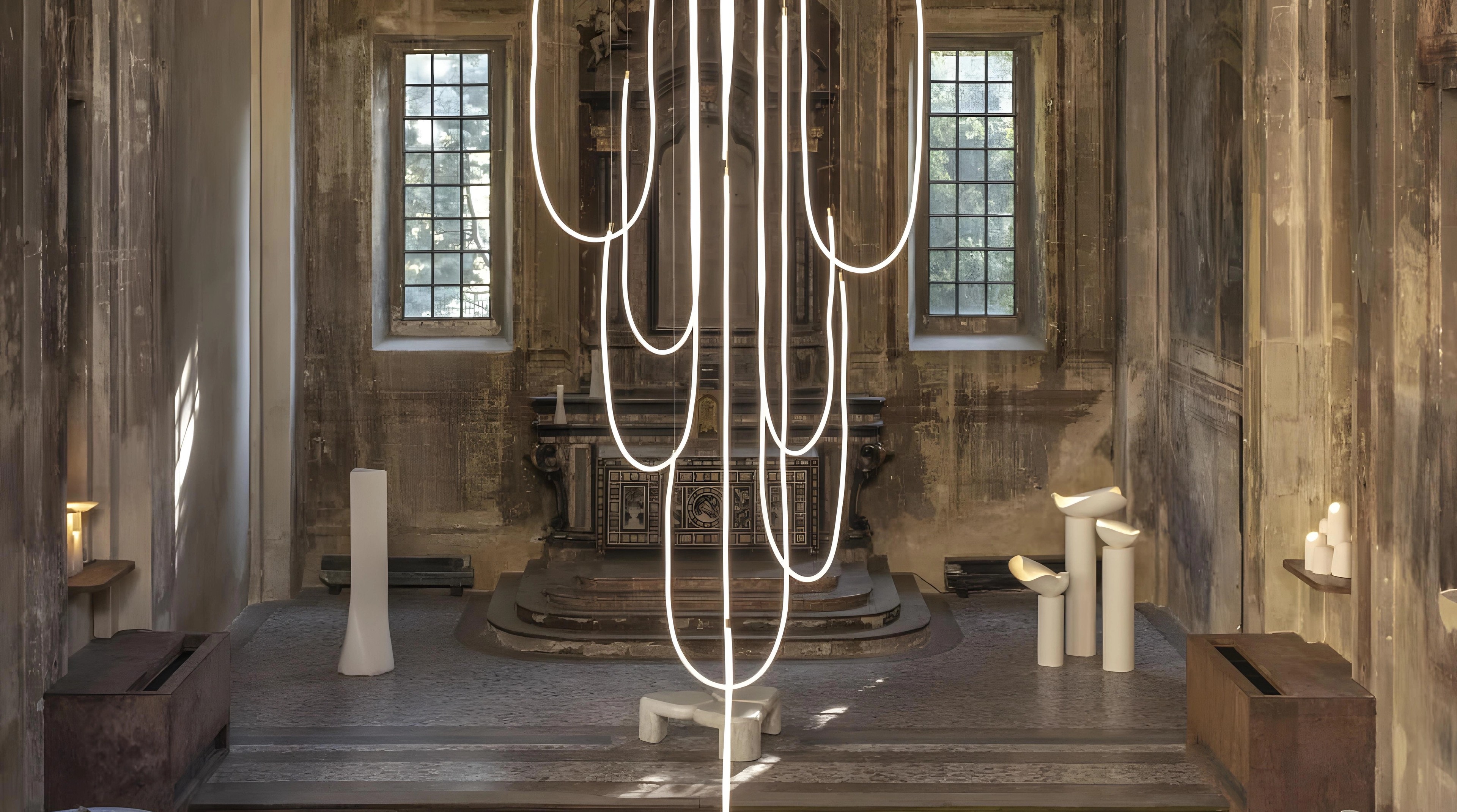
An heirloom is never only an object. It is a vessel for ritual, memory, belief and the trace of the hand that made it. Across light, stone, metal and couture, a new generation of works asks not simply how we live now, but what might remain of us.We tend to imagine an heirloom at the end of its journey: silver softened by touch, a garment carrying the shape of another body, or a table marked by generations of gathering. Yet every heirloom begins in the present, before age has conferred its authority and history has decided what deserves to endure.Materials may last while meaning disappears. What gives an object its afterlife is its ability to hold something less tangible: a gesture, a ceremony or a particular way of seeing. The works gathered here share that quality. Though contemporary, they connect to ancient human impulses—to illuminate darkness, elevate the everyday, dress the body and give physical form to the unseen. Morghen Studio’s *Cascades of Light* makes this proposition almost literal. Descending through the volume of a former church, its elongated lines appear caught between drawing and architecture, as though light itself has been given weight. The familiar chandelier is stripped of ornament and returned to something elemental: a vertical connection between earth and sky.
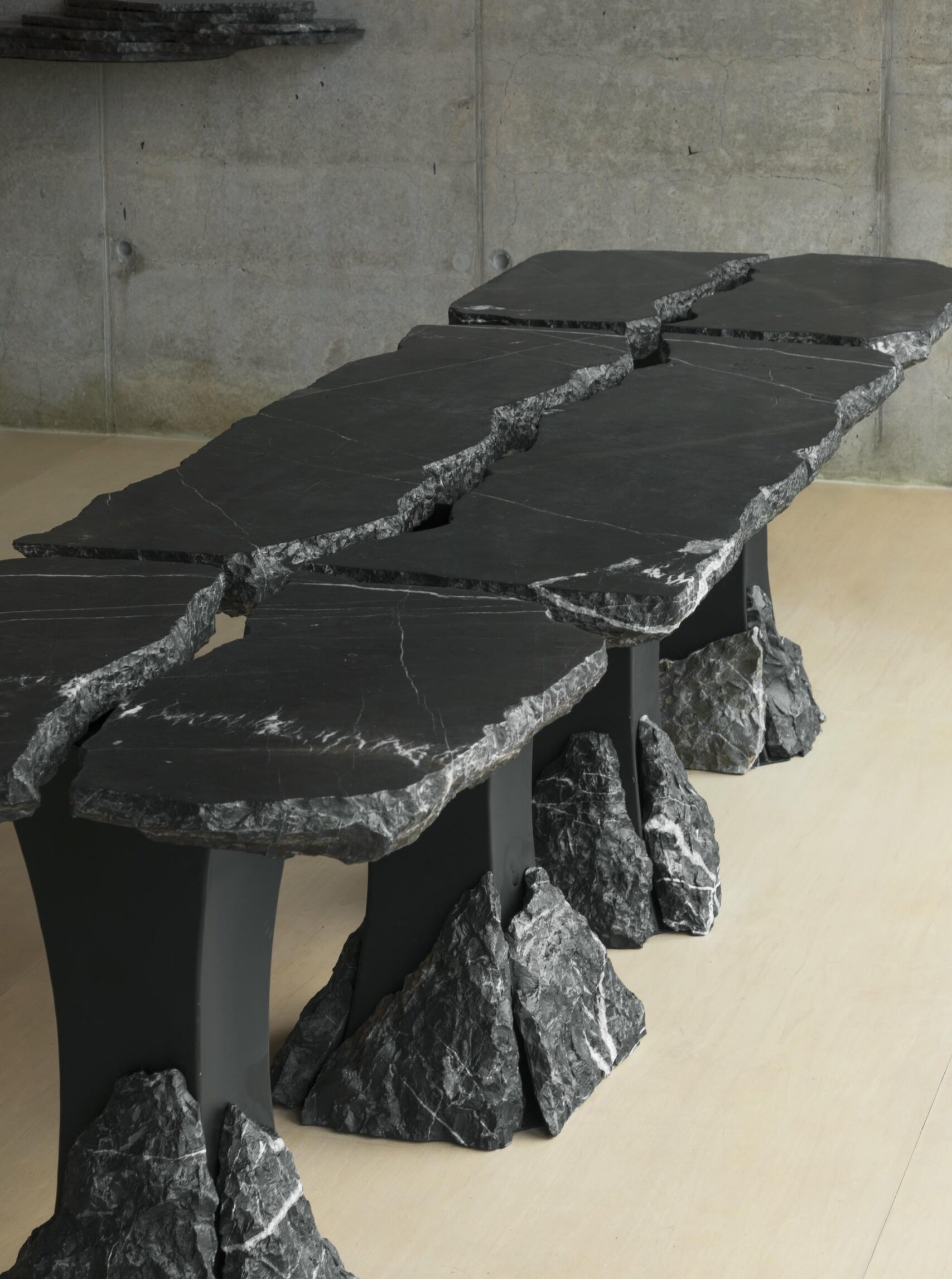
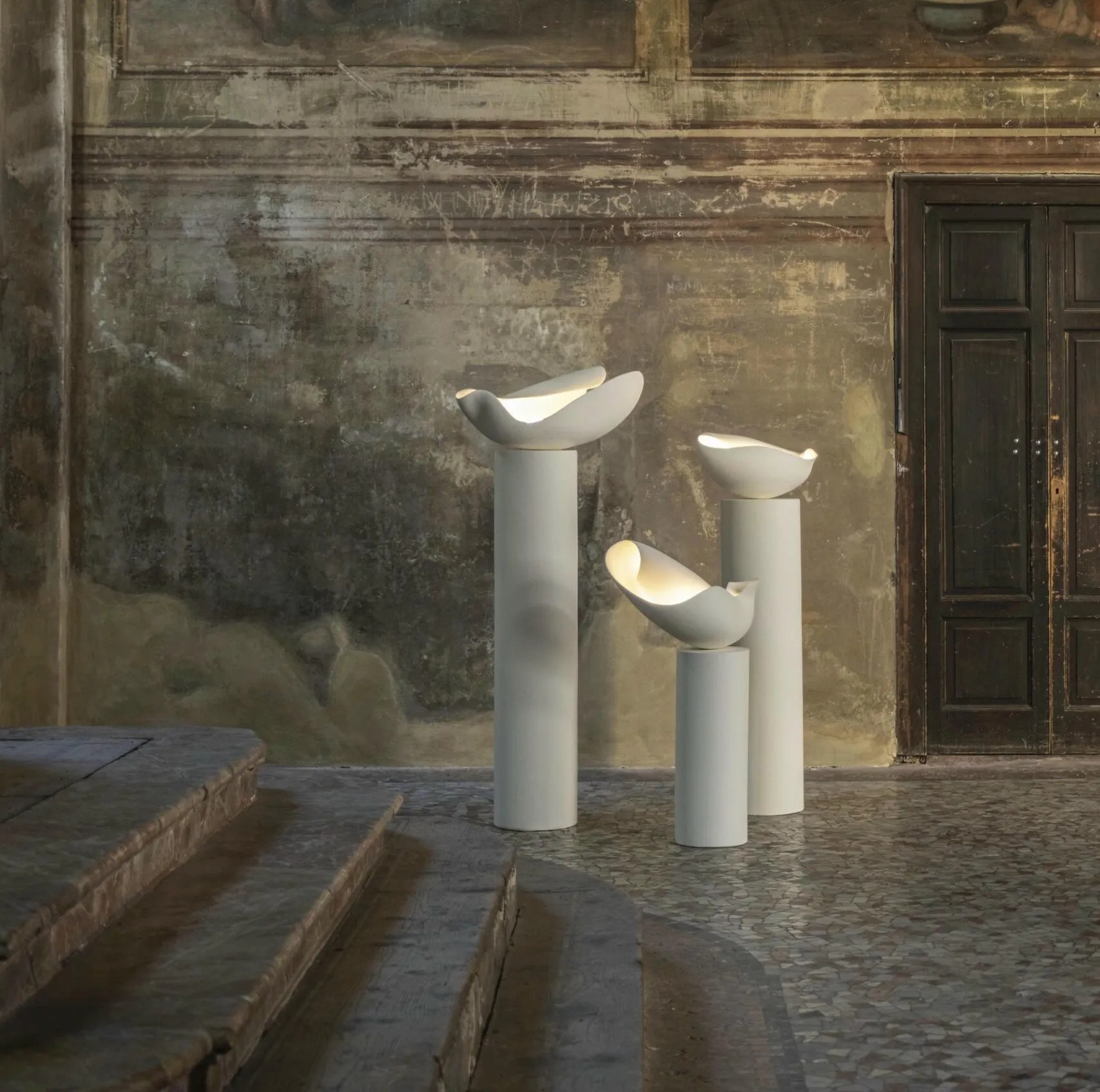
Elsa Foulon’s seashell lamps approach illumination through another primordial form. Their pale, opening volumes recall objects lifted from the ocean floor, while carrying symbolic associations with shelter, birth and pilgrimage. Raised on slender bases, they resemble ceremonial vessels waiting to receive light. Henry Wilson’s ambient table lamp is quieter still. A mineral base supports a hovering disc, releasing a controlled warmth into the surrounding darkness. Nothing is concealed by excess. Its restraint gives the object a sense of inevitability, as though it has been reduced until only the essential remains.In Andrés Monnier’s dining table and altar, the distinction between utility and ritual begins to dissolve. The table has always been more than a surface: it is where hospitality is offered, stories are repeated and absence becomes visible. Monnier’s fractured, darkened forms heighten these familiar actions, making the acts of sitting, gathering and placing feel newly deliberate. This may be the deepest function of an heirloom. It does not simply outlive its first owner; it preserves a pattern of behaviour.
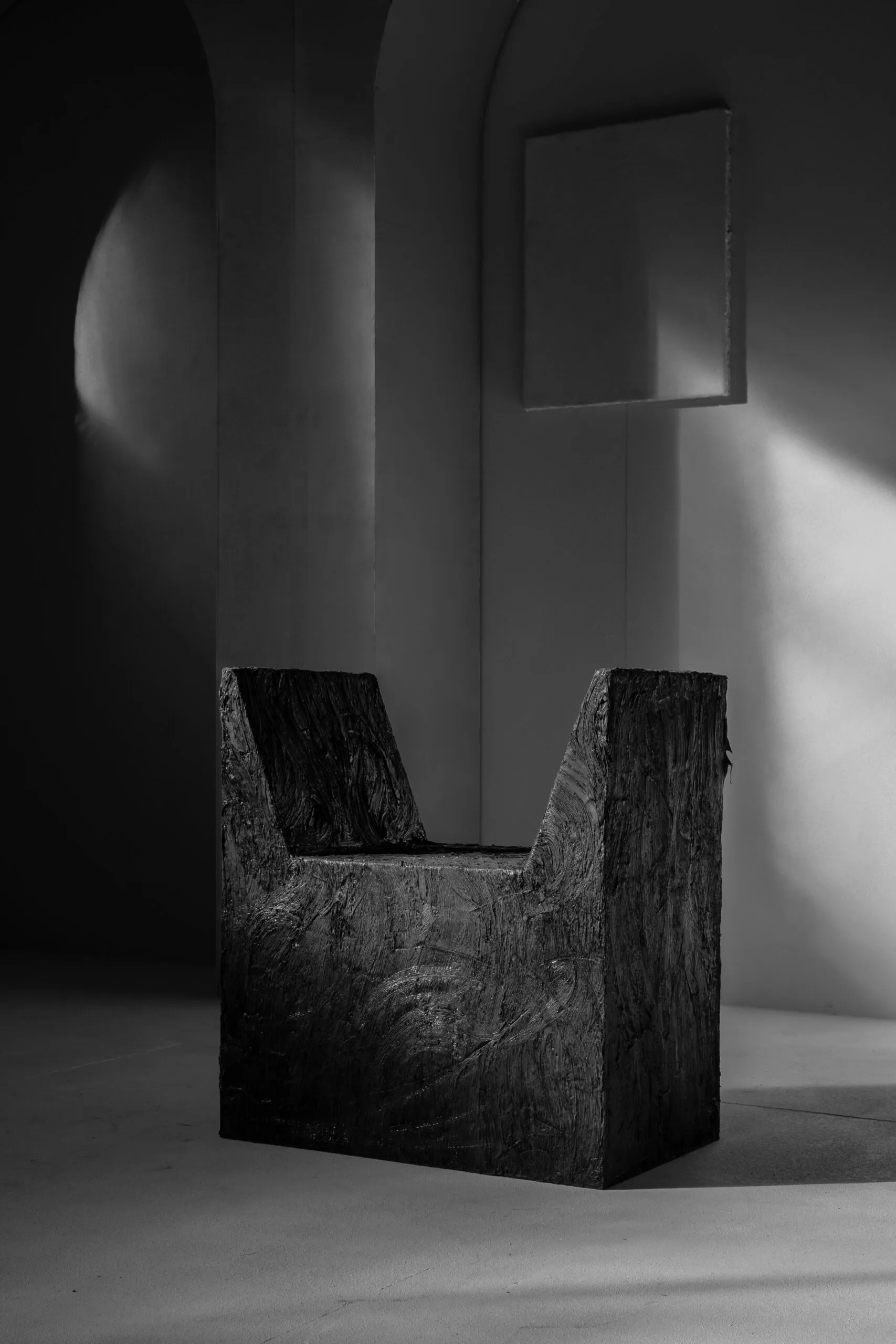
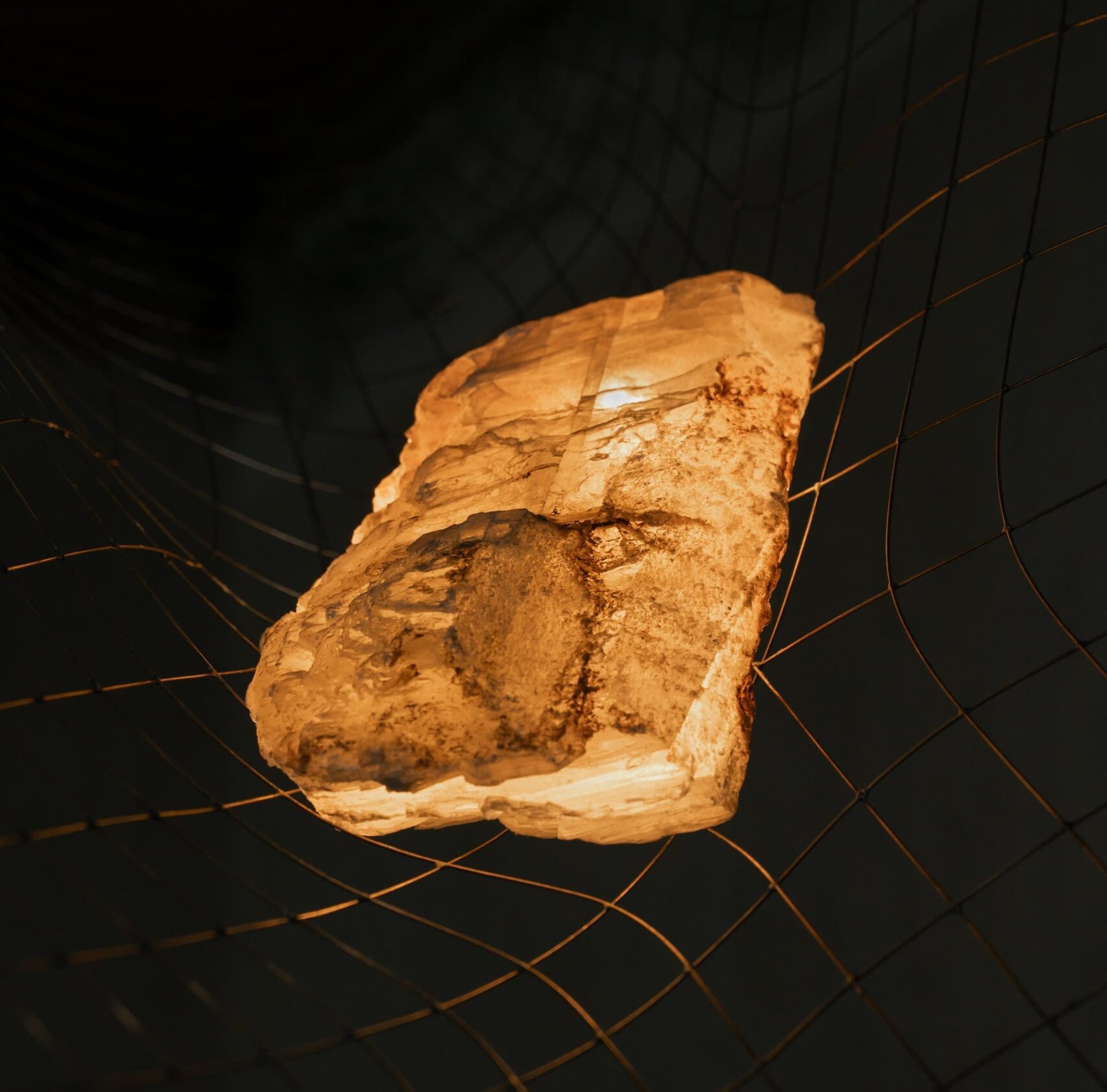
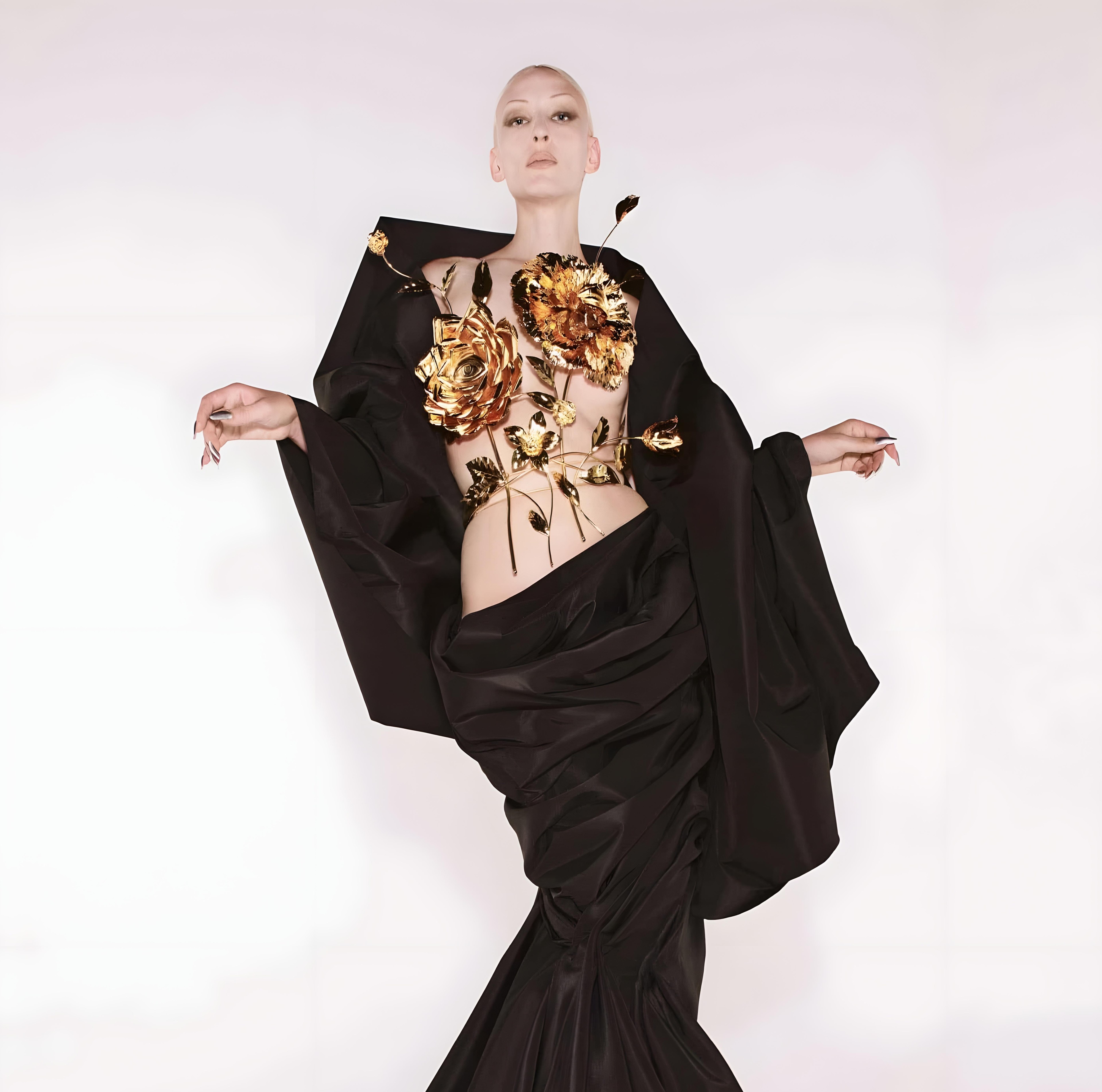
With Schiaparelli’s rose dress, the sacred object moves from the room to the body. Against the severity of black, roses erupt across the torso like an offering, armour or wound transformed into ornament. The garment belongs to an older lineage in which dress communicated desire, mourning and transformation before a word was spoken. Couture is made for a moving body and experienced fully for only a moment. Paradoxically, that fragility makes its preservation more potent. Once removed from the body, the garment becomes evidence of technique, fantasy and the cultural ideals projected onto its wearer.The final works return us to matter. Arno Declercq’s steel sculptural stool is dark, compressed and uncompromising—part seat, part architectural fragment. Contact will alter it: edges will soften and surfaces will register the body. Time becomes a collaborator.Pierre de Valck’s glowing rock reverses this relationship. What appears ancient and inert emits light from within, becoming a speculative artefact that could have been unearthed from the distant past or recovered from a future not yet lived.
Tony Cragg’s sculpture brings the sequence into perpetual motion. Dense black volumes gather, buckle and turn, making solid material appear fluid. The work embodies a fundamental truth: endurance is not the opposite of change. The things that last do so by continuing to reveal themselves.Perhaps this is what separates an heirloom from something merely old. An heirloom remains active, accumulating touch, context and contradiction. These works stand at the beginning of that history, but each carries the possibility of becoming more than evidence of our taste.Together, they form a portrait of what we valued: light in darkness, gathering, transformation, the intelligence of materials and the human need to make meaning tangible.
The future will decide what survives us. Our responsibility is to give it something worth remembering.